Vintage Paper Texture Background Set: A Designer's Secret Weapon
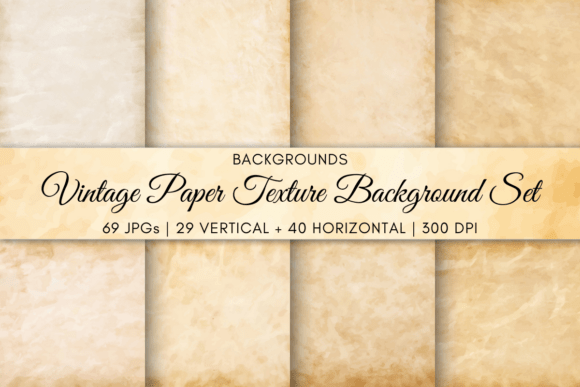
There's a particular quality to aged paper that digital design often struggles to replicate. It's not just about a beige color or a subtle grain; it's the visual whisper of history, the faint impression of stories held within its fibers. For designers, crafters, and brand builders seeking to inject that authentic, tactile warmth into their work, the Vintage Paper Texture Background Set offers a comprehensive and remarkably versatile solution. This collection isn't merely a set of filters; it's a curated library of 69 distinct backgrounds, each with its own character, ready to lend depth and narrative to your projects.
Beyond Flat Color: The Anatomy of Authentic Texture
What sets this collection apart is its attention to the nuanced details that create a believable vintage aesthetic. The textures showcase a range of personalities: some feature the soft, even aging of well-kept parchment, with gentle discolorations and faint foxing. Others present a more rugged, rustic appearance, with pronounced creases, torn edges, or the mottled staining of a document that has truly lived. The color palette spans from warm, honey-toned ivories and creams to cooler, ashier grays and ecru, providing options for different moods and project needs.
This variety is practical. A soft, clean parchment is ideal for an elegant wedding invitation suite or a high-end product label where legibility is paramount. A more distressed, heavily textured background, however, can become the foundation for a compelling social media graphic for a heritage brand, a book cover for a historical novel, or the backdrop for a scrapbook page celebrating family history. The Vintage Paper Texture Background Set provides this full spectrum, allowing you to select the exact level of aging and character that aligns with your project's story.
Strategic Applications: Where Texture Meets Purpose
Understanding where these textures excel is key to leveraging them effectively. Their value extends far beyond simple decorative filler.
- Brand Identity & Packaging: For artisanal brands, boutique shops, or products with a heritage narrative, these textures can form the core of a brand identity. Imagine a coffee roaster's logo set against a rich, stained parchment, or a tea company's packaging using a delicate, linen-like texture. It immediately communicates craftsmanship, tradition, and quality without a single word.
- Editorial & Publishing Design: In editorial design, texture sets the tone. Use a subtle, clean background for chapter openers in a classic literature reprint. Employ a more pronounced texture for a magazine feature on antiques or travel. The high-resolution 300 DPI files ensure crisp results in both print and digital publications.
- Digital Scrapbooking & Journaling: This is a natural home for such assets. The vertical and horizontal orientations provide flexibility for digital journal layouts, photo book pages, and memory-keeping projects. They add a layer of warmth and authenticity that flat, digital backgrounds cannot match.
- Web & Social Media Graphics: A vintage texture can break the monotony of a clean, minimalist website. Use it as a hero background for a blog post about history or DIY crafts, or as a subtle overlay on social media graphics to add depth and stop the scroll. It works particularly well when paired with clean sans serif font or a elegant serif font for contrast.
- Printables & Invitations: From wedding invitations to event programs and printable wall art, these backgrounds provide a ready-made canvas that feels bespoke. The instant download format means you can start designing immediately, saving valuable project time.
Practical Guidance for Seamless Integration
Adopting a new design asset requires a thoughtful approach. Here’s how to get the most out of the Vintage Paper Texture Background Set:
- Evaluate Project Fit: Before selecting a texture, define your project's core message. Is it rustic and handmade? Elegant and timeless? Edgy and historical? Match the texture's personality—its level of distress, color warmth, and pattern—to that message.
- Master the Art of Layering: Rarely will a texture work at 100% opacity as a final background. Experiment with layer blending modes in your design software (like Multiply, Soft Light, or Overlay) and adjust opacity. You can also layer multiple textures from the set for a more complex, custom effect.
- Prioritize Readability: The number one rule with textured backgrounds is ensuring your text remains clear. Test your chosen font pairing directly on the texture. Often, adding a subtle, semi-transparent shape (like a white or cream rectangle) behind text blocks can dramatically improve legibility while maintaining the aesthetic.
- Consider Commercial Licensing: Always review the licensing terms. This set is marketed for both personal and commercial use, which is crucial for entrepreneurs and small business owners creating products for sale. Understand the specifics to ensure your use is compliant.
- Think in Systems, Not Single Assets: For branding, don't use a different texture for every touchpoint. Select one or two complementary textures from the set and use them consistently across your website, social media, business cards, and packaging. This builds recognition and a cohesive brand identity.
The true power of a resource like the Vintage Paper Texture Background Set lies in its ability to evoke emotion and context instantly. It’s a design asset that does more than fill space; it tells a story. By choosing textures thoughtfully and integrating them with care, you can transform flat designs into immersive experiences that resonate with authenticity and timeless charm, connecting with your audience on a deeper, more nostalgic level.