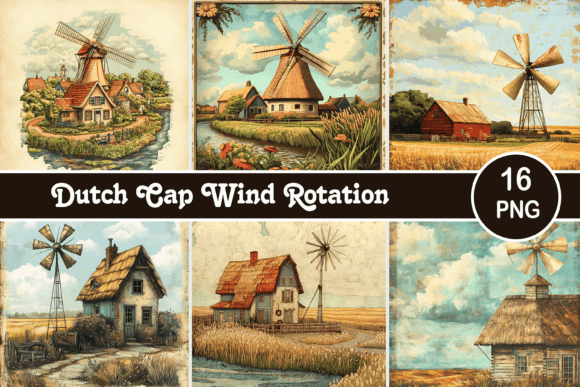
Dutch Cap Wind Rotation: A Dynamic Premium Font for Bold Branding
Finding a typeface that captures motion without sacrificing clarity is a challenge. Dutch Cap Wind Rotation solves this problem with a distinct, kinetic energy that immediately draws the eye. Unlike static serifs or rigid sans-serifs, this display font suggests movement and rhythm, making it a standout choice for designers who need to inject vitality into their projects. It occupies a unique space in modern typography, blending the boldness of a premium font with the organic flow of a more expressive typeface. If you are building a brand identity that needs to feel alive and forward-thinking, this is a strong contender to consider.
Visual Personality and Style
The defining characteristic of Dutch Cap Wind Rotation is its implied velocity. The letterforms often feature subtle curves or angles that guide the eye forward, mimicking the sweep of a wind turbine or the rotation of a cap in motion. It is not merely a collection of characters; it is a design asset with a distinct personality. The style leans towards the dramatic, making it an excellent display font for headlines, logos, and feature text where impact is non-negotiable.
Visually, it balances weight and airiness. While it commands attention, it avoids becoming overly heavy or unreadable. This makes it versatile for both digital and print applications. Whether you are working on a bold logo design for a tech startup or creating eye-catching social media graphics, the font provides a sense of modern sophistication. It feels contemporary and fresh, avoiding the dated look of many novelty fonts while still offering a unique flair that standard geometric sans-serifs lack.
Strategic Applications: Where It Works Best
Understanding where Dutch Cap Wind Rotation excels is key to maximizing its potential. This is not a font for lengthy body copy; its strength lies in high-impact, short-form applications.
- Branding and Logo Design: For brands in the fitness, tech, automotive, or creative sectors, this font offers instant recognition. It suggests innovation and speed, helping to shape a brand perception that is active and modern.
- Editorial and Packaging Design: On magazine covers or product packaging, a headline set in Dutch Cap Wind Rotation can break through visual clutter. It works particularly well for products that want to convey energy, such as sports drinks, performance gear, or modern lifestyle products.
- Digital and Web Design: When used for hero sections or call-to-action buttons, it drives user engagement. It pairs exceptionally well with clean, minimalist web layouts where the typography needs to do the heavy lifting.
- Social Media and Marketing: In the fast-scroll environment of social media, you have seconds to capture attention. This font’s dynamic nature stops the thumb, making it ideal for promotional banners and story graphics.
Enhancing Visual Hierarchy and Readability
Effective design relies on contrast and hierarchy. Dutch Cap Wind Rotation serves as a powerful tool for establishing the top tier of your visual hierarchy. By using it for main headings (H1 or H2), you create an immediate focal point that anchors the design. Because of its strong personality, it forces a clear separation between the headline and the supporting text.
Readability is often a concern with display fonts, but Dutch Cap Wind Rotation is crafted to maintain legibility even at complex sizes. However, context matters. For web design, ensure there is sufficient contrast against the background. For print, consider the paper stock—high-quality digital paper or premium cardstock will allow the intricate details of the letterforms to shine without bleed. When used correctly, it enhances the user experience by making the content hierarchy intuitive and visually pleasing.
Practical Guidance for Designers
Integrating a new typeface into your workflow requires testing. Here is how to get the most out of Dutch Cap Wind Rotation:
- Test Font Pairings: This display font needs a partner that supports rather than competes. Pair it with a neutral sans-serif for body text to maintain readability. A clean sans-serif or a simple serif font can provide the necessary contrast, allowing Dutch Cap Wind Rotation to remain the star of the show.
- Evaluate Project Fit: Before committing, mock up the design. Does the "wind rotation" aesthetic align with the brand's voice? It fits perfectly for "action-oriented" brands but might feel out of place for a traditional, static luxury brand.
- Leverage the Bundle: If you are utilizing the background bundle associated with this font, use the digital papers to create depth. The vibrant, non-transparent backgrounds are perfect for layering text in social media graphics or printed flyers, ensuring your typography pops against a rich texture.
- Licensing and Usage: Always verify the commercial licensing. For entrepreneurs and small business owners, ensuring your design assets are properly licensed for commercial use is crucial for protecting your brand long-term.
Ultimately, Dutch Cap Wind Rotation is more than just a typeface; it is a strategic design asset. By understanding its visual characteristics and applying it to the right contexts, you can elevate your creative projects from standard to striking, ensuring your brand message is not just seen, but felt.